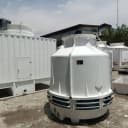
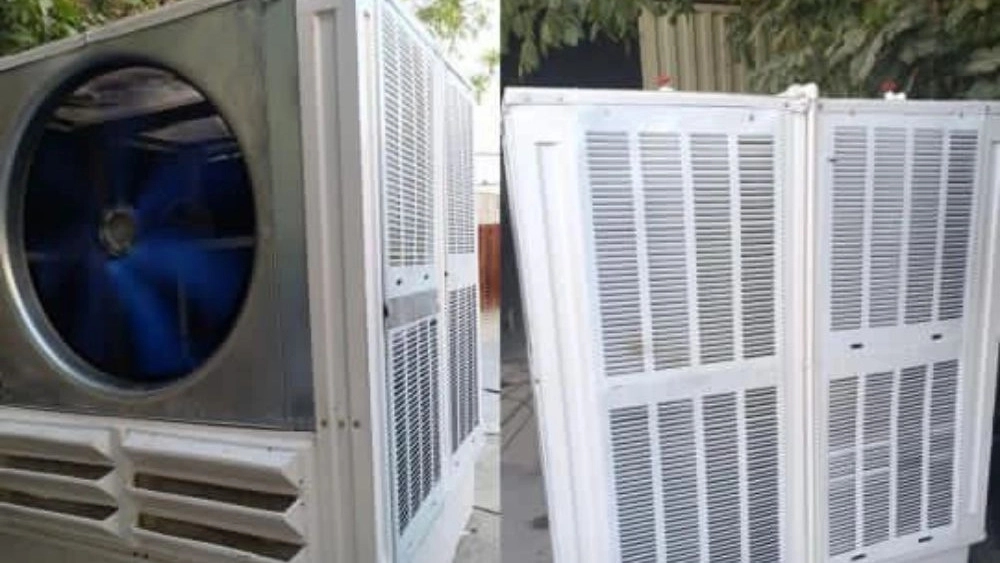
Introduction to components and components of the cooling tower
The cooling tower is one of the most practical devices in the air conditioning industry. In the following, we have provided a comprehensive description of the components of the cooling tower for you to get more information, please stay with us.
main components of the cooling tower
To learn more about the operation of the cooling tower, you need information about the construction and components of this device. Usually, the cooling tower consists of the following components:
cooling surfaces
Cooling surfaces, which are also called packing or fill, are perhaps the most important part of the cooling tower. Most of the heat transfer of hot water and air is done in this part. These surfaces should increase the heat transfer level by creating a large area and should not be too large in terms of dimensions.
After spraying water by the nozzles, the water is spread as a thin layer on the cooling surfaces. As a result, due to the increase in the level of heat transfer between water and air, the amount of water evaporation increases greatly. On the other hand, due to the specific design of the cooling surfaces, water gets trapped inside them and more time is created for heat transfer and water evaporation.
sprinkle nozzles (spraying nozzles)
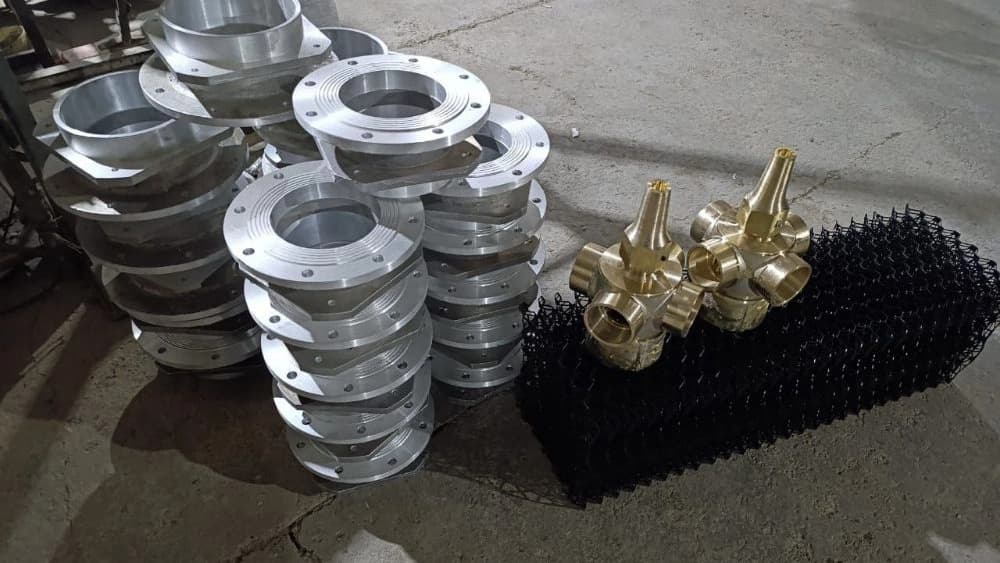
Water spray nozzles are placed on the inlet water pipe to the cooling tower and spray the incoming hot water stream on the cooling surfaces. The task of the nozzles is to evenly distribute and atomize the water inside the cooling tower. In addition to better water distribution, atomization reduces water pressure and lowers its evaporation temperature. Also, turning into tiny water droplets increases the level of heat transfer between water and air.
Drift Eliminator
After water is sprayed on the cooling surface and air is sucked at high speed towards the top of the cooling tower, part of the water droplets are pushed towards the fan outlet without evaporating. The presence of water droplets in the air stream causes water wastage and sometimes damages the fan impeller.
The drip catcher removes most of the water droplets in the air and prevents water droplets from being thrown towards the fan. Drip catcher is usually produced in two types: blade and honeycomb. By increasing the number of paths in the drip catcher, water loss decreases; But on the other hand, the pressure on the fans and energy consumption increases.
cooling tower fan (FAN)
For cooling in conventional cooling towers, a mechanism is needed to transfer and move the air along with the expenditure of energy. This mechanism is known as Forced Convection and is usually done with the help of a fan. Natural Convection of air is done without spending energy and with the difference in temperature and air density.
Fans are either suction type or blower type. Suction fans are placed in the upper part of the cooling tower and are more axial than the model. On the other hand, the blower fans are located at the bottom of the cooling tower and are of centrifugal type. The material of fan blades is usually aluminum, galvanized iron, fiber and fiber reinforced plastic (FRP). Blades made of FRP reduce the energy consumption of the electric motor due to their lightness. The angle of the fan blades can be changed; So that in the summer season, when the air density decreases, they increase the angle of the blades to increase the suction power of the fan.
Play Water (Sprinkler)
The water dispenser or water dispenser is a part that distributes hot water equally and uniformly on the packing surfaces. The water dispenser is usually made of aluminum, brass or polymer compounds. The water outlet holes of the diffuser lead to the nozzle and are located inside the cooling tower. The number of holes varies depending on the design. Also, the water dispenser must have a very low pressure drop and be resistant to corrosion.
cold water pond
The cold water basin is responsible for collecting cold water and storing it on the floor of the tower.
Louvre cooling tower
Louvers are placed in the air suction area on two or four sides of the cooling tower, depending on whether the air flow is cross or asymmetrical. The most important task of this device is to spread the incoming air evenly and prevent water from splashing outside the cooling tower. Louvers are usually made of polyethylene or PVC and are made in two types, honeycomb and blade.
overflow tube
If the float does not work when the cold water pool is filled, this pipe will remove the excess water. If the amount of water is too much and reaches the cooling (packing) levels, the performance of the cooling tower will be disturbed.
water drainage of the pond
In the open circuit cooling tower system, water is in contact with polluted air and there is also the possibility of insects and other environmental pollution. Therefore, in the lowest area of the cold water basin, a pipe is placed to drain the polluted water, which is replaced by clean water by the compensatory water input.
inlet water pipe
The hot water coming out of the refrigeration cycle condenser enters the cooling tower through this pipe.
Outlet water pipe
The water cooled and cooled in the cooling tower returns to the refrigeration system from the outlet water pipe in the cold water pond.